Under the Boardwalk

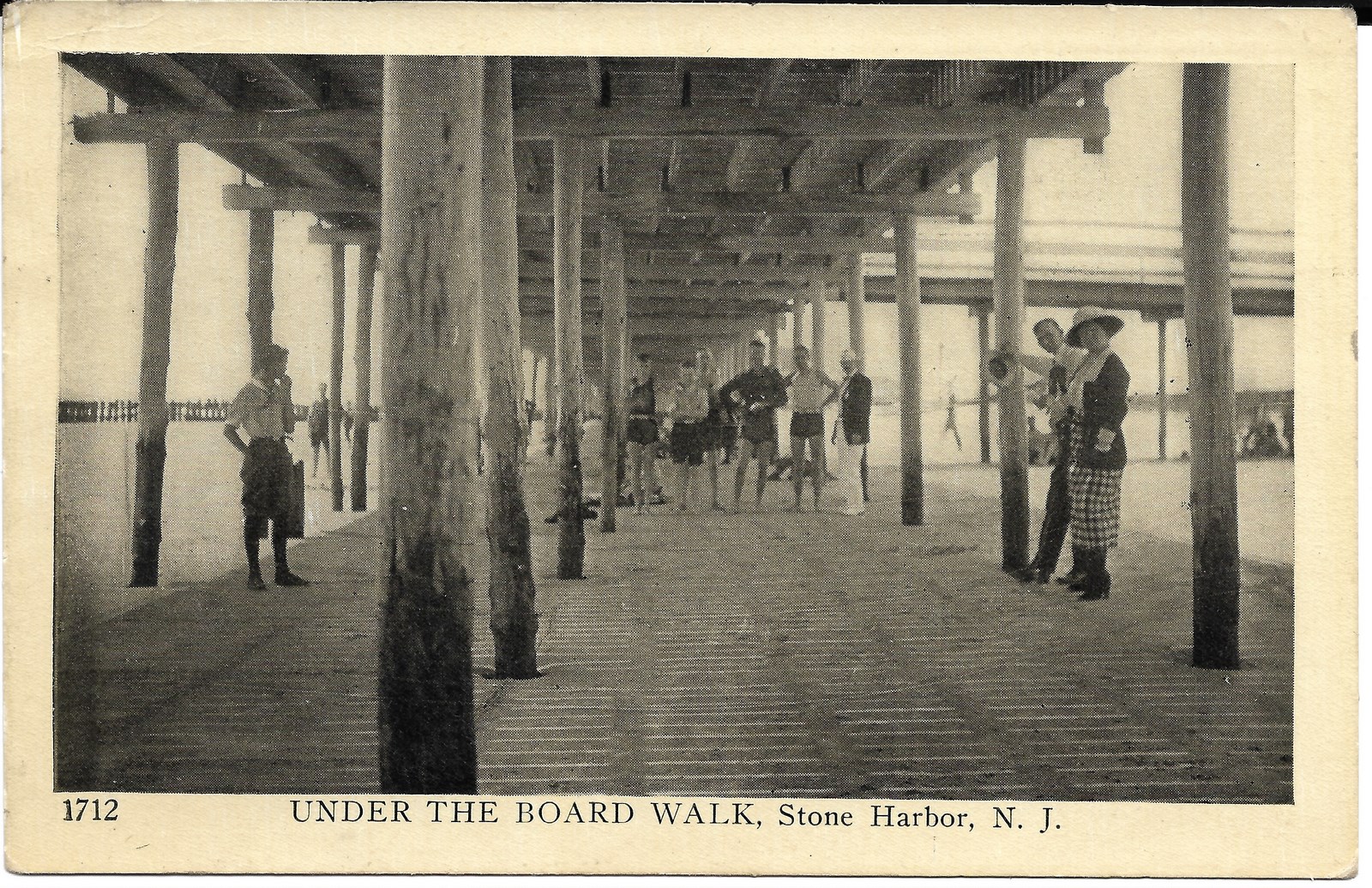
Under The Board Walk, Stone Harbor, New Jersey

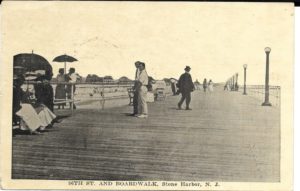
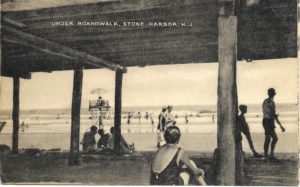
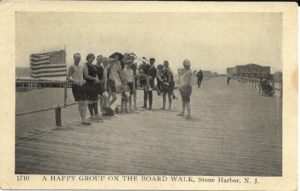
An avid postcard collector recently acquired this classic postcard on eBay. In it, a number of people find shelter from the summer sun under the boardwalk. A young man in knickers, the woman in a long checkered skirt and summer millinery, the fashionable man wearing white slacks and shoes, dark jacket, bowtie, and fedora, and a number of bathers are each captured as they posed over ninety years ago.

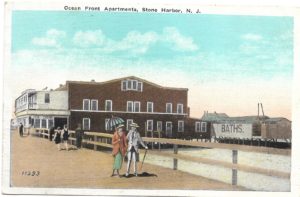
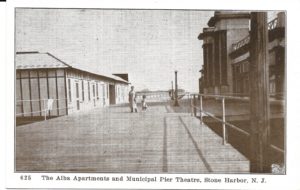
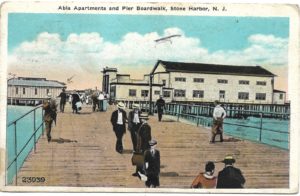
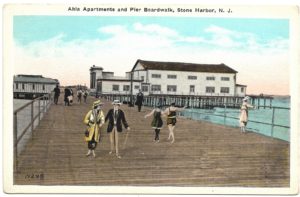
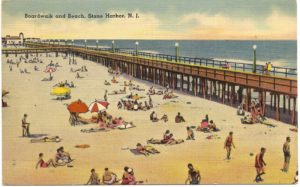
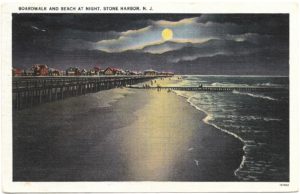
Postmarked APR 4, 1929 at Stone Harbor, NJ, and placed in the mailstream to a recipient at the Y.M.C.A. in Binghamton, N.Y., the penned message states, “My nose is all red and it isn’t from drinking either.” The postcard depicts the popular Stone Harbor Boardwalk before the Great Atlantic Hurricane of 1944 destroyed it.  These chronologically arranged vintage views circa 1918-1944 document that long-gone Stone Harbor attraction.

The Boardwalk at Stone Harbor, New Jersey

by Harlan B. Radford, Jr.

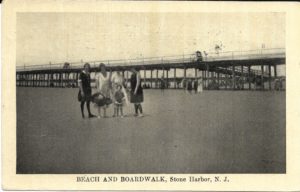
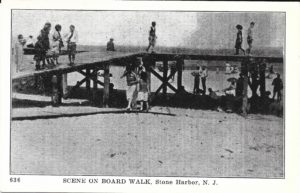
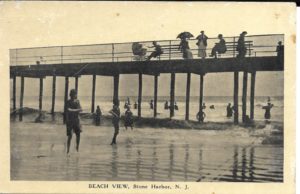
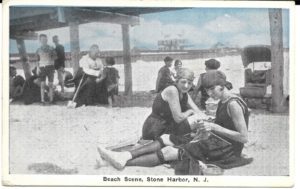
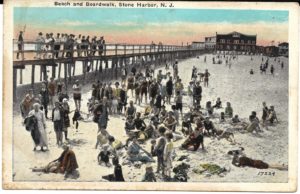
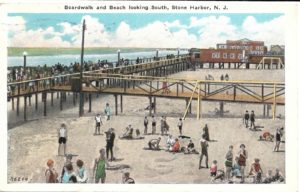
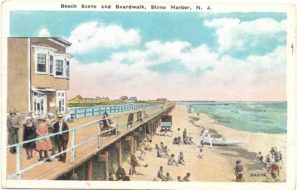
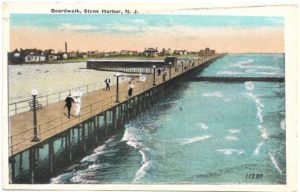
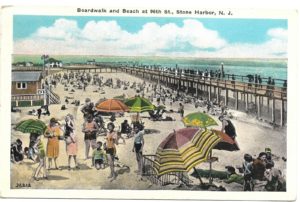
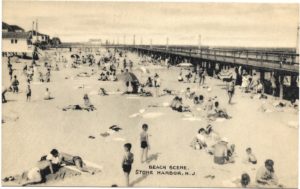
The boardwalk at the seashore resort community known as Stone Harbor, NJ is a distant memory that few can now recall. The following picture postcards and photographs serve as proof of the one and a half-mile long boardwalk from 83rd Street to 106th Street that once existed there for 28 years.
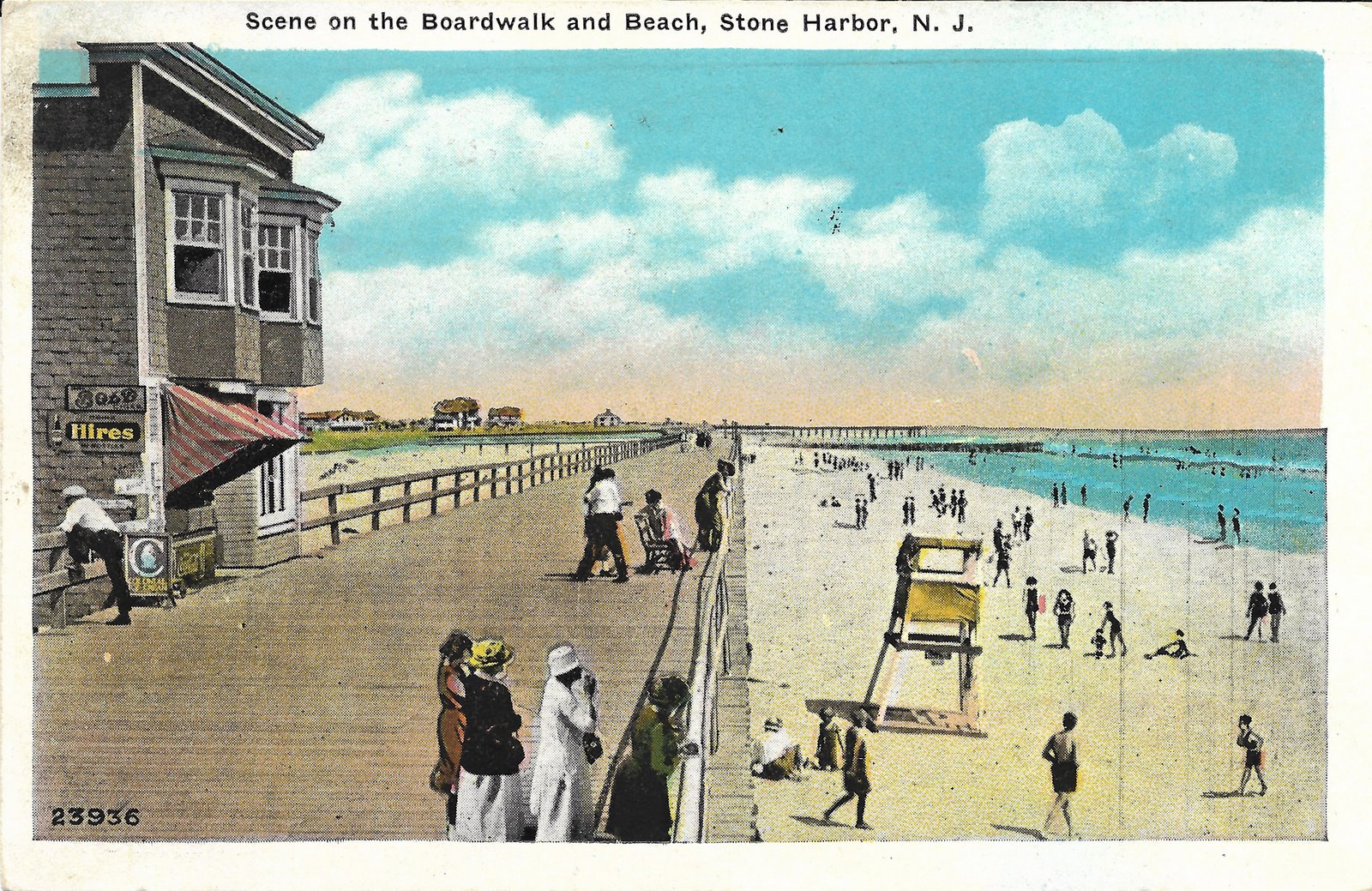
Scene on the Boardwalk and Beach, Stone Harbor, NJ Aug 15, 1927 Note Coca-Cola and Hires soft drink signs on building

The term boardwalk describes a walkway or promenade, often elevated, typically constructed of wooden planking, and is located along a beach.  Atlantic City became the first seashore resort to construct a boardwalk back in 1870 to curb the amount of sand beachcombers tracked into the train and hotel lobbies. According to National Geographic, the State of New Jersey has 28 boardwalks and promenades – more than any other state.

Those of us who have personally experienced the charm of boardwalks at other locations, either today or yesteryear, are reminded of their immense popularity and the many attractions they offer. “Walking the boards” or leisurely strolling the boardwalk, often at the end of a day, provided countless opportunities for fun and relaxation including souvenir shopping, entertainment, arcades, miniature golf, saltwater taffy, and delicious fudge.

Greetings From Stone Harbor, NJ

If the number one attraction of the Jersey Shore is the sandy beaches, then boardwalks may be the second most popular reason why people flock to seashore communities during the summer months. Stone Harbor built its boardwalk in 1916. But we all know that mother nature and the mighty forces of the ocean have on numerous occasions not been kind to boardwalks and oceanfront properties.

Philadelphia Inquirer, Sept 16, 1944, p1, 16

Stone Harbor boardwalk’s reckoning came on September 14, 1944, when a particularly devastating storm, which became known as the Great Atlantic Hurricane of 1944, struck the New Jersey coast. Stone Harbor lost its entire boardwalk to this monster storm. The boardwalks of Sea Isle City, Atlantic City, Ocean Grove, Asbury Park, and Long Branch all suffered similar fates.

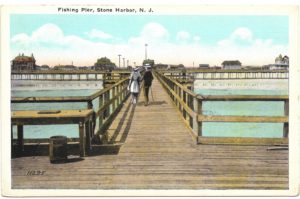
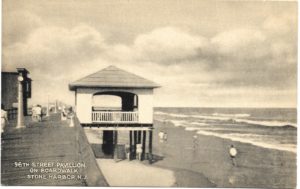
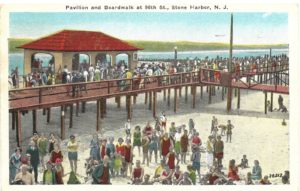
Residents assessed the extent of damage and the replacement costs associated with rebuilding not only the Stone Harbor boardwalk but also a 500-foot fishing pier out into the ocean and a covered pavilion at 96th Street. They agreed that there was a greater value of having unobstructed ocean views and consequently decided not to have the boardwalk rebuilt. A few resorts like Atlantic City and Asbury Park would rebuild.

In all my years of collecting postcards, one thing I have never seen is any view that shows the damaged Stone Harbor boardwalk immediately after that storm.  If you have one, please share it.

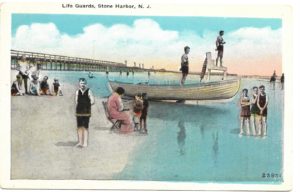
The following 38 vintage picture postcards featuring the Stone Harbor boardwalk are arranged in chronological order starting with views taken around 1918 and progressing to the time of the boardwalk’s sudden demise in 1944.

In the absence of the boardwalk, years later, beach umbrellas entered the picture and proved useful and popular as a means of escaping the direct sunlight on those hot afternoons. While we can only anticipate the reopening of shore businesses, beaches, and boardwalks in New Jersey and are excited for ‘Stage 2’ of Gov. Phil Murphy’s reopening plan, check out these views, and at least enjoy this virtual trip back in time!
 

Solving a Mystery: Who was this shy little girl, Lois Grant?

We love this picture – her expression looks like her mother just told her very sternly, “now HOLD STILL!”  It’s exquisite, the image just 2-1/2” high.  So who was she?

Hint – her father built a number of houses here in Riverton.  (Yeah, that hint wouldn’t have helped us, either…)

We love when our members and readers give us puzzles to solve.  You never know where they’ll lead.

Recently, thanks to a reader’s inquiry sent to this website by Beverly DeFelice of Red Bank, NJ, whose father had collected tintypes and left her one of a little girl who was from Riverton, NJ. – from 1859 – we were faced with a mystery.  Beverly knew the picture wasn’t of her father’s family, but who was it?  She asked if we might know anything and does the family still exist?

(Tintypes, also called ferrotypes, were most popular in the 1860s and 70s and made with light-sensitive emulsion on a thin sheet of lacquered iron.  They were much more durable than the previous photos on glass, such as daguerreotypes and ambrotypes and were very popular.  The process was patented in 1856 so our example here is quite early.)

As you’ll see, it has a gold leaf mat and on the back paper is written, in fountain pen ink and old handwriting “Lois W. Grant, Riverton, N.J.  Taken 1859.  Age 6 years.”

But the picture wire and screweyes don’t feel like 1859 and neither does the sticker that says “Darmstaetter’s, Lancaster PA.”  What’s that about?

Nothing about this rang bells, but then, with a little digging …

Ancestry.com is a great place to start.  A single search of that name, in Riverton, with that approximate birthdate, and – bingo – we have the 1860 Census that shows her living in a family of 6.  Unfortunately, there were no house numbers in those days, but this starts us on our quest. Her father’s name was Joel Grant, and his occupation was “carpenter.”

For those with access to an Ancestry account, we have a huge public tree we’ve been working on, called “Early Families of Riverton NJ” and we added Lois and Joel and a number of relatives to it.  Have a look here:  https://www.ancestry.com/family-tree/tree/108021762/family/familyview?cfpid=322186642113  (You can also use the “Tree Search” button to look for anyone else we’ve been adding, Biddles, Parrishes, etc.)

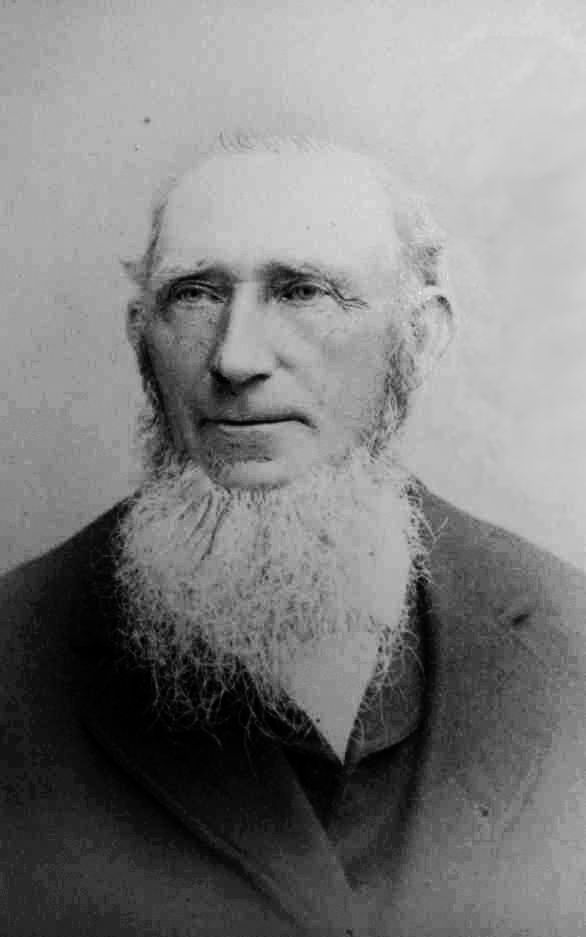
Joel Grant photo coll. Randall Coury on Ancestry

With his name, we find that more than one Ancestry user has made a tree that includes this Joel Grant – and one of them has a picture of him!  Now we know what her father, that early house carpenter in Riverton, looked like.
So now we have a name of the grownup, let’s dig further …

The Historical Society of Riverton did a ton of research back in the early 1990s for our National Register Historic District nomination, and we have placed a copy of it online here:  https://rivertonhistory.com/wp-content/uploads/2017/02/Historic-Riverton-District-app-1999.pdf

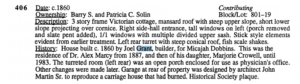
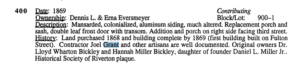
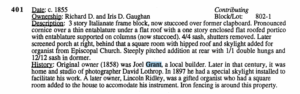
Since it’s a PDF, it’s easy to search for “Grant” and – wow – it turns out that our little girl’s father, Joel Grant, was the builder (and real estate developer on a modest scale) who gave us several buildings which still stand today.

Riverton National Register Historic District Inventory:

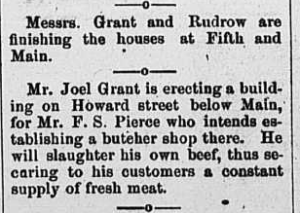
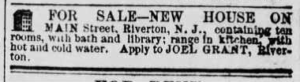
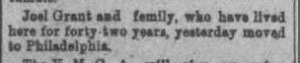
Also on our HSR website, of course, is our digitized newspaper collection, which helped with more.

Those buildings are: 401 Main, c. 1858; 406 Main Street, 1868; 400 Fulton Street, 1869; 521 Howard Street, 1881 – probably the “butcher shop of Mr. F. S. Pierce,” today much altered.

There were likely others, of course.

Since HSR board member Iris Gaughan and her husband Richard own 401 Main Street and they’ve recently researched all of the deeds for their house, it was an easy matter to find that our Joel Grant actually owned it for a long time, from 1858 to 1872.  Could this have been their home at the time of shy little Lois’ photograph?

detail from 1860 Stone & Pomeroy map shows Grant at 401 Main

Indeed – we have a map!  Attached to the National Register inventory is a dim copy of the Riverton detail of the 1860 Stone and Pomeroy Map of the Vicinity of Philadelphia, with the principal houses identified, and by golly, this one is marked “J. Grant.”

Guaranteed, this is where the little girl lived when her picture was taken.

So what became of the Grants, do they have surviving kin, and why was the tintype framed in Lancaster?

More fun with Ancestry.com and Newspapers.com came next.

Lois married Isaac Eastwood in Riverton in 1878.  He was a traveling salesman of dental supplies.  They seem to have lived with her parents, even after moving to Philadelphia in 1895, and never owned their own home.  Lois’ mother died in 1901, her father Joel the house carpenter died in 1904, and Lois and her husband boarded thereafter until his death in 1917.  His death certificate reads “cirrhosis of the liver,” an indication of long struggles for everyone.

Lois went to live in Upper Darby in the home of her grown daughter Ellen (“Ella”), and her husband, who had a nice new home in Upper Darby.  He was also a traveling salesman.

The 1920s seem to have been quietly domestic for them.  In 1934, our Lois died there at age 80 but then Ella lost her husband, Ralph, just three years later to a heart attack in 1937, at just 57 years of age.

Ralph had come from Lancaster County, so Ella moved there at some time after 1940, probably to live with or near her in-laws.

This would explain the “Darmstaetter’s” label on the paper on the back of the frame. Google tells us that Darmstaetter’s was a long-time photo and stationery store on Queen Street in Lancaster, so it’s easy to picture that, once she had settled in Lancaster County, Ella must have had the store reframe the tintype of her mother.

We can safely assume, then, that the fountain pen writing on the back is in Ella’s hand, recording for us the facts about her mother Lois.

Ella died there in 1953.  She and Ralph had just one child, a son Robert, who was also a traveling shoe salesman like his father.  He was single and had lived at home until he married at 37.  At some point he went to work for the Reading Railroad.

Robert had no children, dying in 1992 at age 80.

So now we know, Lois has no living descendants.  We contacted the family member on Ancestry who had the picture of Joel Grant (a descendant of one of Lois’ brothers).  He was fascinated with the story but he and Bev agreed that it’d be best for the little tintype to have its new home here in our archives.

We’ll never know how Robert’s cherished photo of his grandmother in 1859 made its way to Bev DeFelice’s father’s collection, but we are very grateful to Bev for taking on its stewardship and bringing it home to Riverton.

Thank you, Bev!  Moral of the story:  always write names and dates on the backs of photographs!  Without that, this would have been just another little picture that had lost all its meaning.  (Now, how do we do this with digital photographs? …a topic for another day.) – Roger Prichard

We urge you to wholeheartedly welcome back local businesses with your patronage

Hey, kids, raise your hand if you remember dealing with any of the businesses advertised on this June 6, 1932 New Era Business Directory.

Business Directory, The New Era, June 9, 1932, p5

Now, for extra credit, how many businesses listed there are still in operation?*

Businesses have come and gone over the years, but let’s not let COVID-19 be the reason that a local business can no longer thrive.

We all long for those times when we could patronize local stores unencumbered by masks, counter shields, and social distancing.

We look forward to June 15 when most — but not all — nonessential retail businesses in New Jersey will be allowed to reopen with shoppers inside stores; capacity will be limited to 50% and both customers and employees will be required to wear face coverings to protect against the coronavirus.

We thank all of the essential businesses that have opened under difficult circumstances.

We urge you to show your appreciation to local businesses by helping them to recover from the shutdown and again prosper.

Schwering Hardware, possibly first ad in Palmyra Weekly News, Sept 22, 1922

*Yeah, you got it.

Schwering’s Hardware has endured depressions, recessions, wars, and now a pandemic!  Steve and Suzanne Schwering will celebrate the absolutely essential establishment’s 100th birthday in 2022.

Disastrous Storms – Then and Now

Disastrous Storm, Camden Democrat, July 26, 1873, p2

The aftermath of the recent violent derecho storm system reminds us of other times that Riverton has suffered at the hands of Mother Nature.

tree near Cedar Street, Sept. 2013

In our own memory, we recall other trees downed from storms, but this time there were so many, not only here, but in surrounding towns of Palmyra, Delanco, and Palmyra, that PSE&G crews have been overwhelmed trying to restore power.

Please send us your photos and recollections of storm damage from this incident or from others back in the day.