We know that vessels of wood, fiberglass, steel, and even papyrus can float. But concrete? Seems implausible, but it happened.
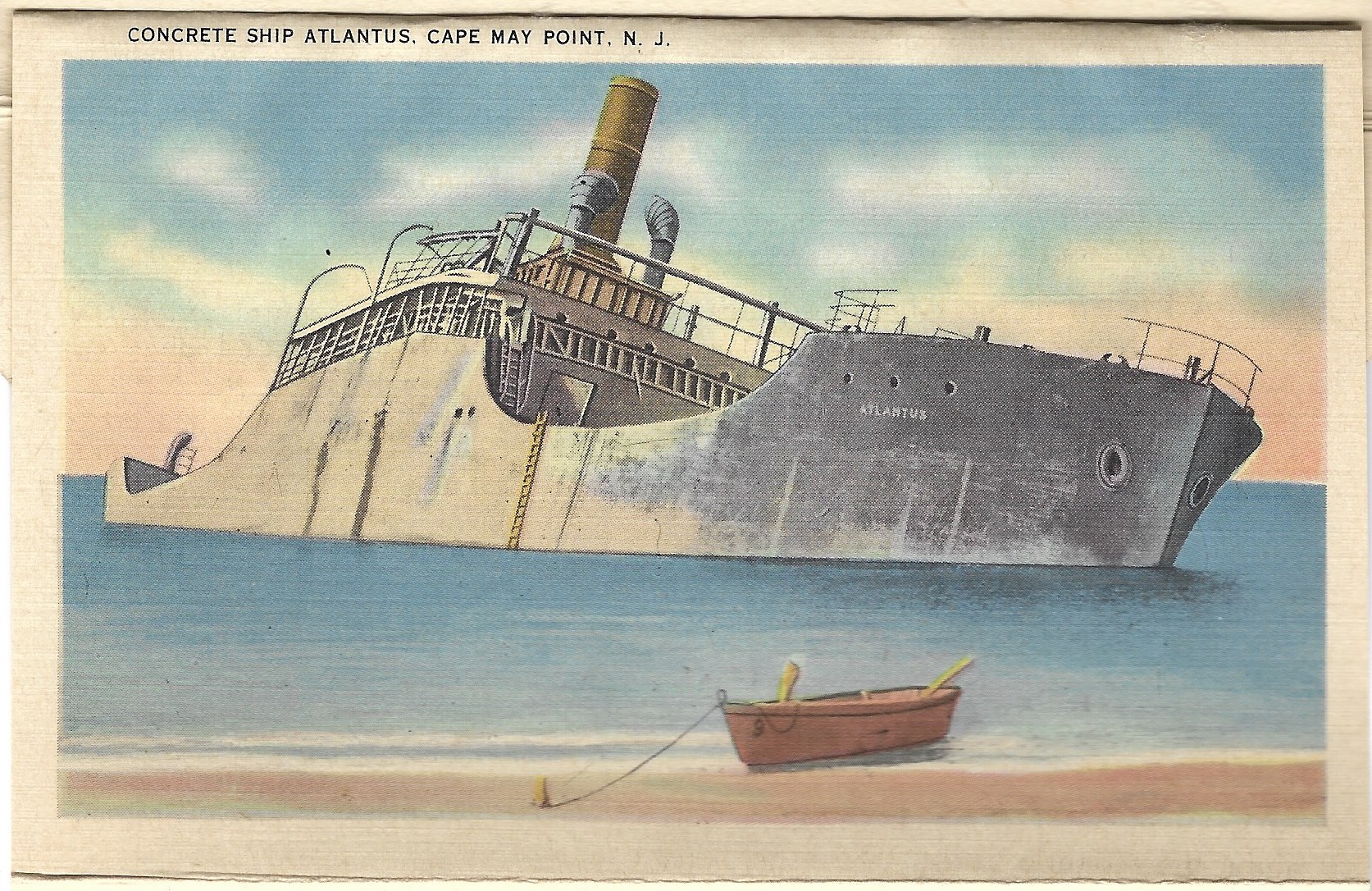
vintage postcard, concrete ship “Atlantus,” Cape May Point, NJ, built 1918, sank 1926
The Concrete Ship – “S. S. Atlantus”
Cape May Point, New Jersey
by Harlan B. Radford, Jr.
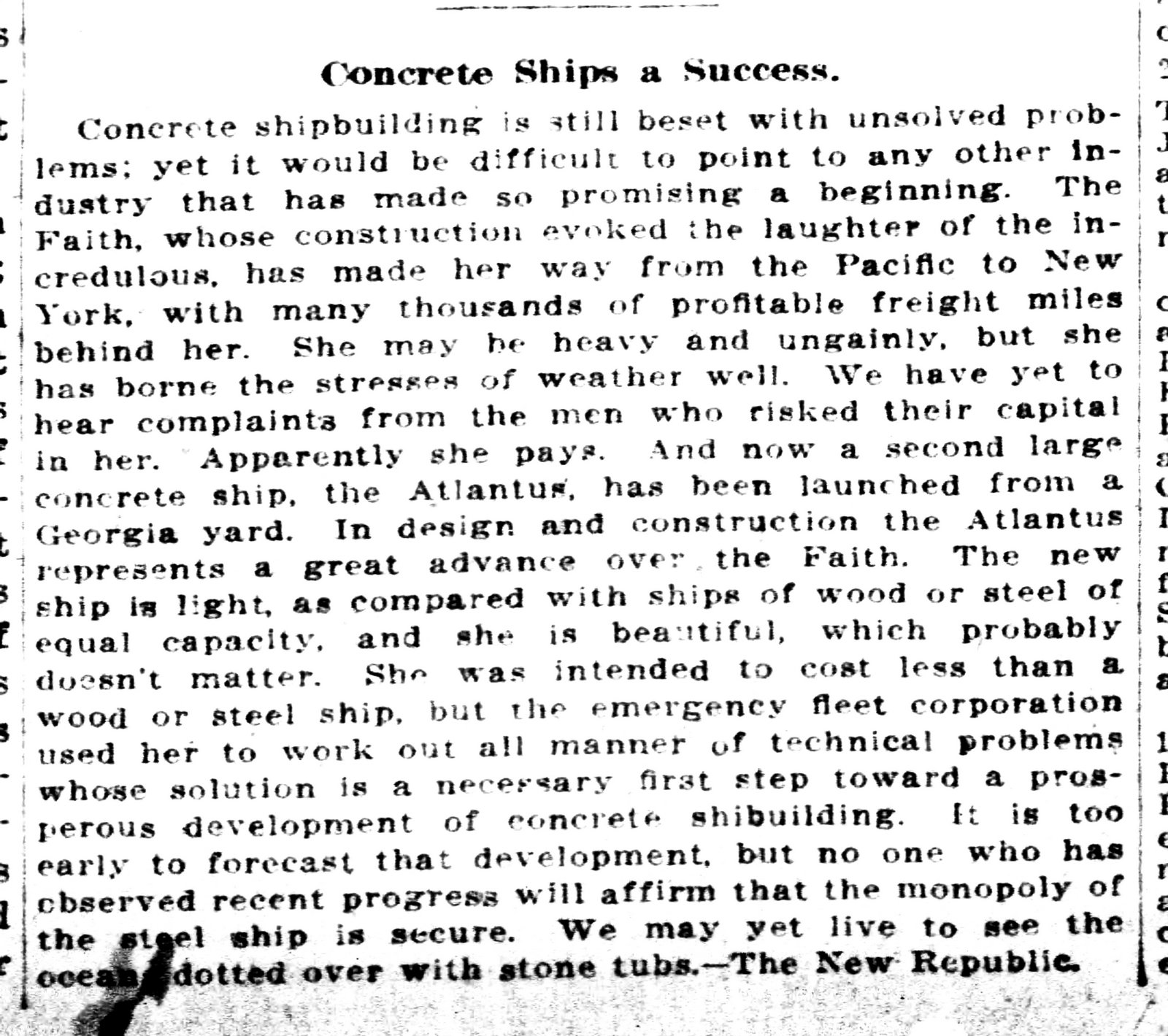
Pittsburgh Daily Post, Jan 26, 1919, p10
The remains of the concrete ship now situated at the foot of Sunset Boulevard in Cape May, NJ was one of an experimental lot of 12 freighter ships built by the United States Government during World War I. The rather unlikely concrete construction technique was brought on by the critical wartime shortage of steel.
Launched in 1918, not only did the “Atlantus” float, she was used as a coal steamer until being decommissioned since the concrete vessel proved a disappointment by her sheer weight and slow speed.
Later, promoters purchased the “Atlantus” for use as a ferry landing for a proposed route from Cape May Point to Lewes, Delaware. But one night a nor’easter broke it from its mooring and beached it before proper placement could occur.
Attempts were made to raise the ship and re-position it but to no avail. Consequently, the proposed ferry project did not materialize. Over many years, millions of visitors have traveled to see her sink deeper and deeper into the sand. Eventually, the “Atlantus” will disappear entirely and be just a distant memory.
A symptom of the current COVID-19 situation seems to be an onset of nostalgia by many parties and we are not immune to its effects. Based on our website comments and feedback, neither are our readers. For now, whether it’s looking through old photos, reminiscing about simpler times, or returning to one of our favorite interests, nostalgia mostly seems to be offering people a way to cope during the pandemic.
Here are some examples of the reminiscence therapy that website visitors found here.
Ye Olde Swimming Hole, Camp Lenape, Medford, NJ c.1954
I attended Camp Lenape 1952-54. The post cards pictured in the article brought back many memories. While the article mentions sleeping in wall tents I remember sleeping in a lean to which had two sides, a back and a slanted roof. The front was open and there was a floor. Like some of the others who have commented I also went through the speechless weekend being initiated into the Order of the Arrow. Had to sleep “under the stars” in my sleeping bag. Woke up in a huge puddle of water as it rained most of the night. Many of my memories of Camp Lenape have faded but some are vivid. We had the luck to grow up during the best of times.
Should something here rekindle a memory of your “best of times’ please leave a comment.
Stuck at home during the pandemic has awakened in some of us a long-dormant interest in baking, photography, or genealogy.
Earlier in the summer, Joann Sanderson found the Research Your House page helpful when she was doing a deep dive into the history of her house, coincidentally also on Thomas Avenue.
Hi, The research your house information is fantastic. I already started researching online the book and page of deeds…
In June, two visitors (one local; one from Texas) who visited our Store page inquired into buying our Romance of Riverton DVD, but we had to wait until August, when we were allowed to finally get to our inventory in the Riverton Free Library’s basement to get them.
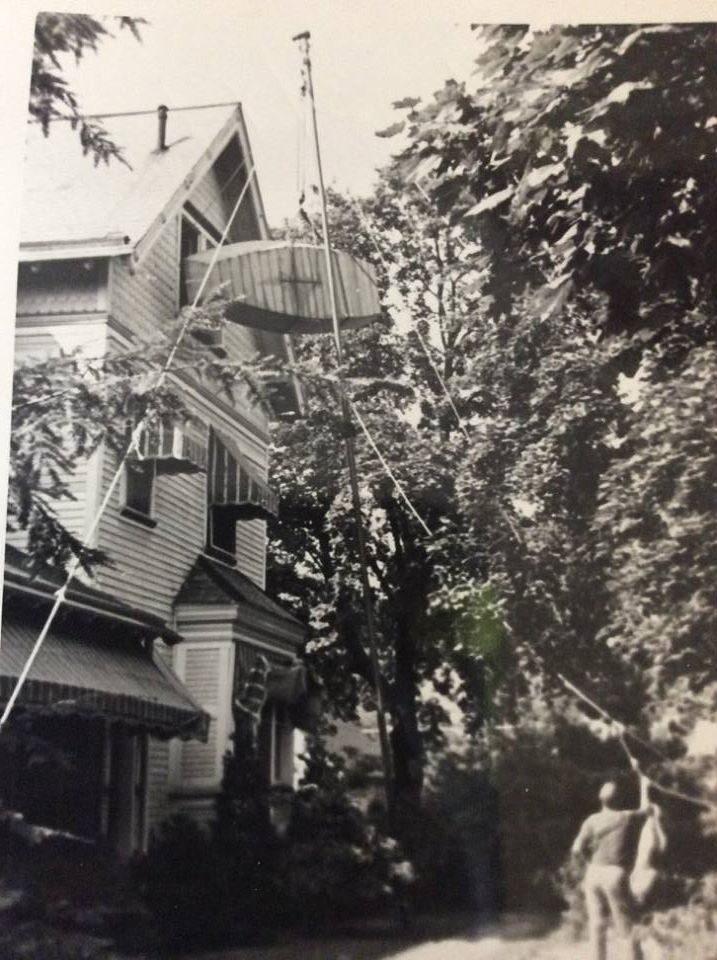
As a former owner of Duster 100, the boat hanging from the 3rd floor window. I have heard of this photo from Mr. Robert Lundstedt but never did see it until now. The boat was in our family from the late 60’s until my wife and I sold it in the mid 80 after doing some extensive rebuilding of the boat in the winter of 81-82. Thanks for the great posts of long-ago memories and the great picture.
This stressful time has robbed us of the opportunity to celebrate the 50th Anniversary of the Historical Society of Riverton with you.
For now, the Historical Society of Riverton has no immediate plans to hold meetings or offer presentations. Look for a Gaslight News newsletter in October in which we will lay out a plan for the fall and winter.
Until then, try looking through almost ten years of website posts, or browse five decades of back issues of the Gaslight News and reams of news from Riverton’s and Palmyra’s old hometown newspapers. We hope that the experience proves to be a diversion from the daily news. Please know that we welcome your comments, feedback, and submissions. Feel like writing about your experience? Send it to rivertonhistory@gmail.com or use the contact form below.
N.S. Savannah, artist conception by Benjamin Eisenstat of Moorestown, NJ
THE N. S. SAVANNAH AND ITS CONNECTION WITH CAMDEN, N.J.
by
Harlan Radford, Jr.
The N.S. Savannah was the world’s first nuclear-powered merchant ship. The prefix letter “N” designates “nuclear.” President Dwight Eisenhower suggested the idea in 1955 and Congress authorized it in 1956.
postcard NY Shipbuilding Corp.
The New York Shipbuilding Corp. located at Camden, N.J. built this merchant ship for the Maritime Administration, the U.S. Department of Commerce, and the Atomic Energy Commission.
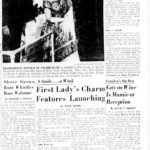
The U.S. government provided funding to support a demonstration project that would serve as a showcase for the peaceful use of nuclear technology. The keel was laid and dedicated by Mrs. Pat Nixon on May 22, 1958. More than a year later on July 21, 1959, First Lady Mrs. Mamie Eisenhower ceremonially christened and launched the Savannah. Installation and testing of the nuclear reactor and undergoing a series of sea trials took another 2-1/2 years.
The all-important “maiden voyage” took place on August 20, 1962, and the Savannah did not enter regular service until 1964. During the spring and summer of 1964, the Savannah toured the U.S. Gulf and Eastern coast seaports and then commenced on a historic crossing of the Atlantic Ocean for the first time with visits to Bremerhaven, Hamburg, Rotterdam, Dublin and Southampton. This ship’s namesake, SS Savannah, was the first steam-powered ship to cross the Atlantic Ocean in 1819.
philatelic cover Savannah launching 7-21-59
The specially prepared philatelic cover at right marks the date of the actual “launching” of the N/S Savannah on July 21, 1959. Postmarked in Camden, N.J., the postcard features a pictorial postmark which reads “N/S SAVANNAH / FIRST ATOMIC LINER / U.S. MERCHANT MARINE.”
Elements in the blue 3-cent U.S. postage stamp commemorating the 50th Anniversary of Oklahoma Statehood further tie into the theme of atomic energy. The central design of the stamp is a horizontal arrow superimposed on a solid outline map of the State of Oklahoma and piercing the orbital emblem, which has become the symbol for atomic energy. The arrow represents the frontier days of Oklahoma prior to Statehood in 1907 and the atomic symbol represents the new frontiers.
With an overall length of 595 feet, this ship was capable of a speed of 20.25 knots. As for payload, the Savannah was capable of carrying 60 passengers and 9,400 long tons of cargo. The Savannah was only in service for an eight-year period from 1964 to 1972 and was one of only four such nuclear-powered cargo ships ever built.
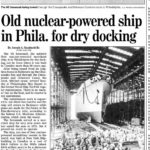
While officially deactivated in 1971 and after being moved around numerous ports, the ship finds itself presently dry-docked at the Philadelphia Navy Yard, yet to be officially decommissioned. History tells us that the SS Savannah was a commercial failure. Despite the innovative nuclear propulsion system of its successor, the N.S. Savannah shared a similar destiny. It proved to be short-lived and failed to prove its commercial feasibility.
The following five postal covers relate to N.S. Savannah milestones.
NS Savannah World’s First Nuclear Powered Merchant Ship
The first-class letter at left is marked “Mailed aboard The N.S. SAVANNAH” and bears a hand-applied pictorial cachet in black ink which also states “World’s First / Nuclear Powered / Merchant Ship. It bears a Galveston, Texas postmark dated MAR 26 PM 1964.
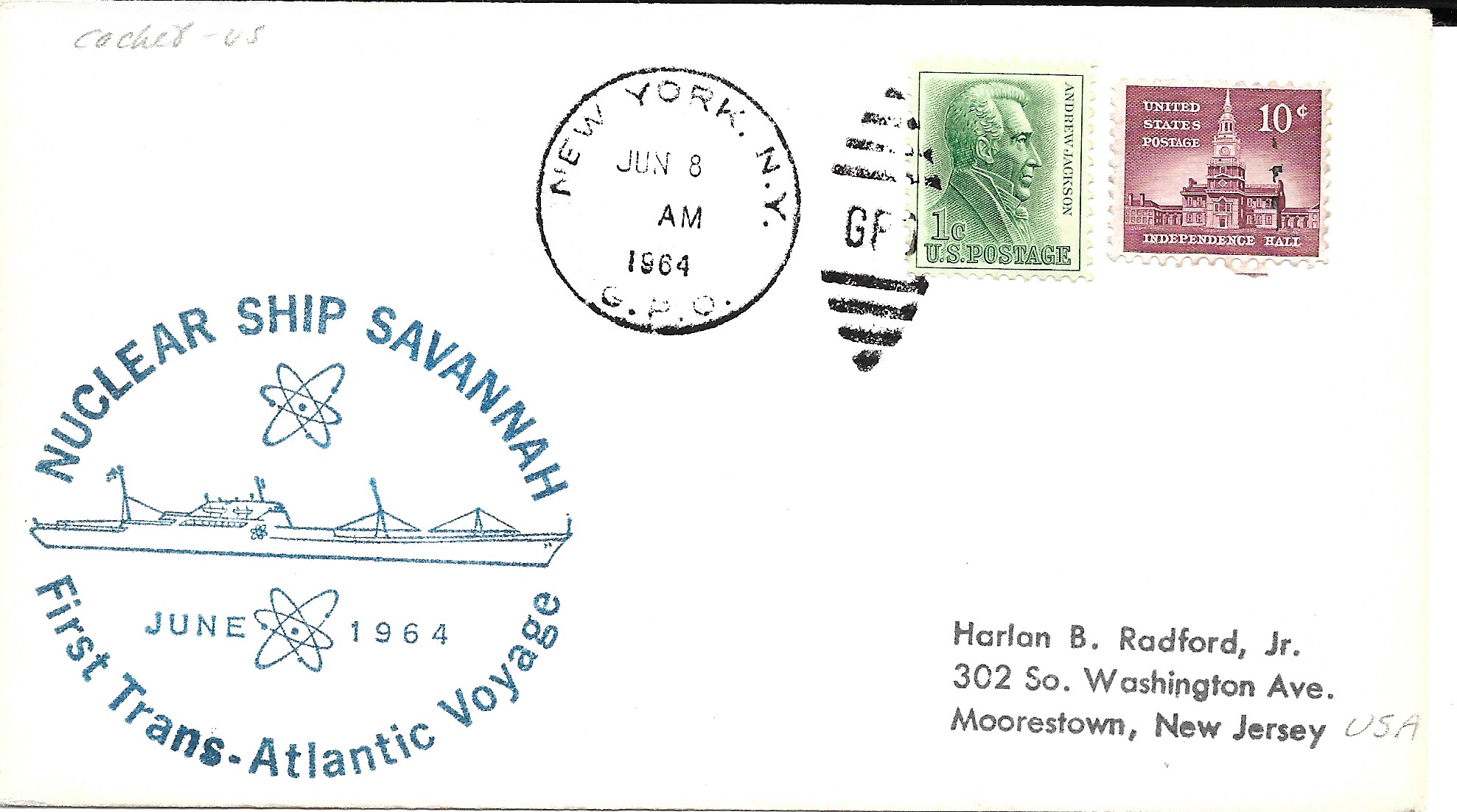
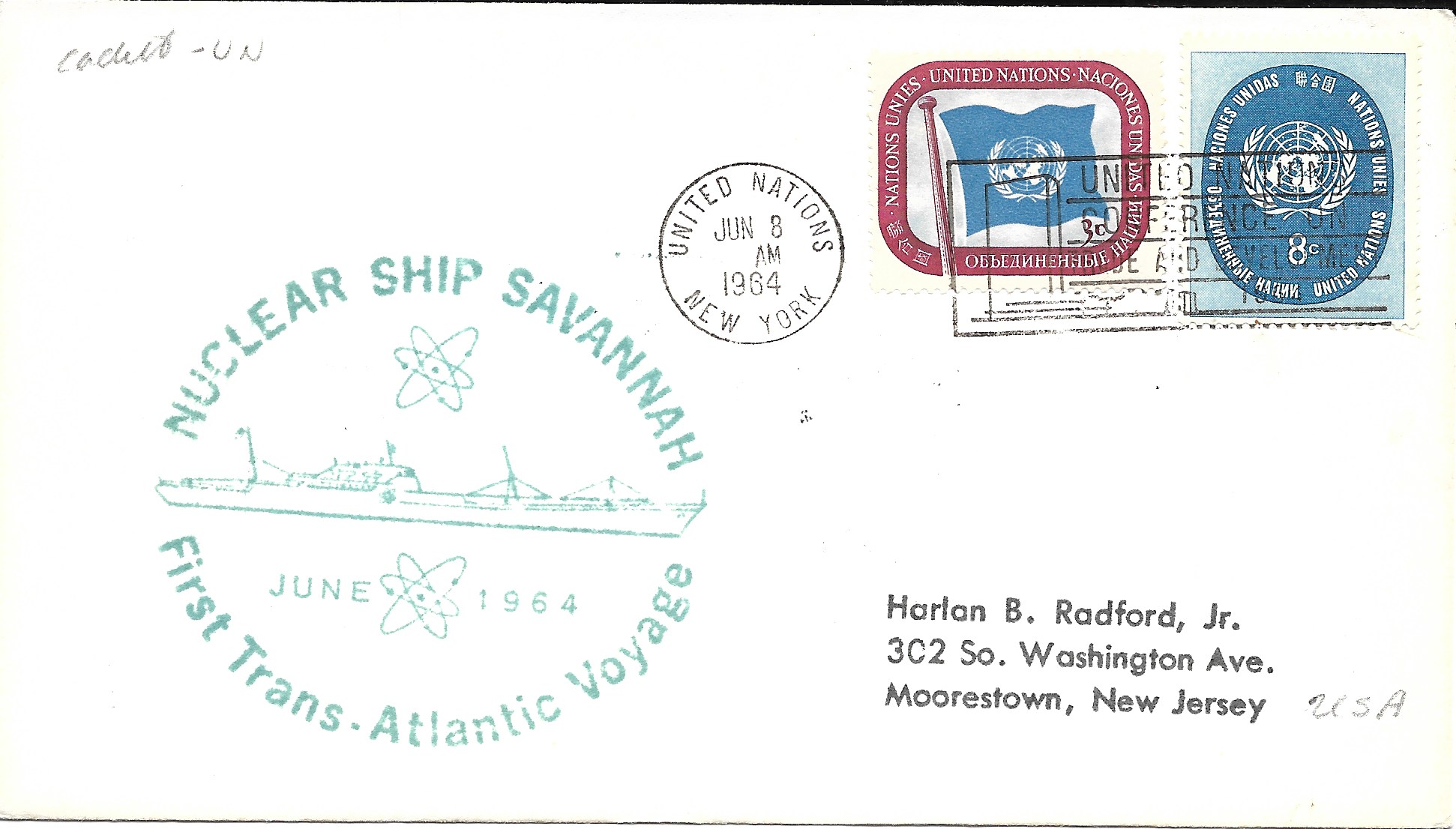
The officially prepared cachet imprints for the following two covers boast “First Trans-Atlantic Voyage.” The NS Savannah carried them onboard during its first Atlantic crossing the following June.
One envelope displays a General Post Office in New York City postmark and the other was actually postmarked and dispatched from the United Nations headquarters, also in New York City.
NS Savannah First Trans-Atlantic Voyage
With 11 cents in stamps affixed to each cover and postmarked JUN 8 AM 1964, each received postal backstamps upon receipt at Bremerhaven, Germany, dated in European style “18.-6.64-11” or June 18, 1964 11AM.
Next is an example of a “paquebot” cover, which simply translated means “posted at sea.”
NS Savannah paquebot cover
This piece, destined for a United States address, originated on the NS Savannah. On arrival of the ship in a port, a private messenger transmitted the mail to the nearest post office where it was deposited, canceled, and forwarded through the regular mailstream. Accordingly, this particular cover received two postal markings, one provided onboard the ship dated JUN 16, 1964, and the other marking placed by German postal authorities dated two days later on June 18, 1964 (18.-6.64 -11).
NS Savannah two postmarks
Why two same date postmarks for this next cover? One was applied on board the N.S. Savannah DEC 28, 1964, and another, stamped “Wilmington, N.C.” bears the same date. Presumably, the ship was in her North Carolina port on that date.
The extraordinary ship was in service for a mere ten years. It eventually ended up just across the Delaware River from where it was built in Camden, in a dry-dock at the Philadelphia Navy Yard, and finally was mothballed in Baltimore.
The previous several philatelic covers mark milestones in this innovative civilian maritime ship’s short span of existence and the following contemporary accounts in periodicals further expand the topic.
NS Savannah, Courier-Post, Jul 21, 1959, p17
NS Savannah, Courier-Post, Jul 21, 1959, p18
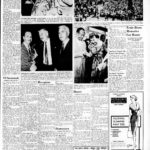
NS Savannah, Courier-Post, Jul 22, 1959, p1
NS Savannah, Courier-Post, Jul 22, 1959, p3
NS Savannah, Philadelphia Inquirer, Sep 12, 2019, pB2
NS Savannah, Asbury Park Press, Oct 12 2019, pA10
Two interesting and informative videos about the N.S. Savannah are currently available on YouTube and can be viewed by typing in the following titles:
#1 – “NS Savannah: Atoms for Peace (1962)” – Time 5:39
#2 – “NS Savannah in Drydock in Philadelphia,
Pennsylvania – November 17, 2019” – Time 3:27
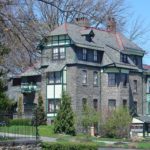
106 Lippincott Avenue, Riverton, NJ, PHOTO CREDIT: Roger PrichardHome of Mr. Alfred Earnshaw ca. 1887 Coll. Riverton Free Library
Attributed to Frank Furness, this grand 1880 high-Victorian mansion is on a big corner lot on a beautiful street, one block from the Delaware River.
The Historical Society of Riverton, including its officers and board, has no financial stake in this property. We bring this home to your attention because it is our mission to discover, restore, and preserve local objects and landmarks – and what a landmark this house was, and can be again!
In a town of distinctive architecture, the 1880 Alfred Earnshaw house at 106 Lippincott Avenue is a standout for the right person to restore it.
Agent Cecilia Still of Keller-Williams Realty – Moorestown (856) 316-1100 listed the property. See more property details and photos on realtor.com.
It really needs someone who will love it. The previous owners really did, investing major effort to reveal that amazingly-intact exterior from under awful siding.
Bob and Aggie Kennedy took their stewardship of this treasure seriously for the more than 20 years that they lived here. Both were longtime members and enthusiastic supporters of the Society and were fine citizens of Riverton, who rolled up their sleeves and supported many projects on behalf of the town.
Now their beautiful paint job is long overdue for a knowledgeable painter to bring it back. Even to a casual observer, it is clear that good stewardship means much more than just a paint job. As the realtor’s listing says, this historic home “needs TLC”. Note well that the listing on realtor.com reads “This is an AS-IS estate sale”.
But with the right contractors and vision, this will be a stunner.
Lots of intact detail
It looks to us like all of the original exterior detail is still there, except that the porch has been replaced.
On the inside, the first thing you might notice is that a miracle has occurred – somehow no fool ever painted over that amazing 1880 woodwork.
Victorian house lovers: how often does THAT happen? Did we mention “miracle”?
If you’ve ever had to restore a staircase like that, you know how unusual this is.
The Frank Furness connection
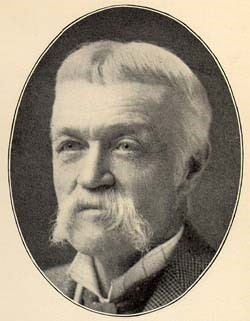
Frank Furness in 1901, from Moses King, Philadelphia and Notable Philadelphians
If you’ve ever wanted a house by a “celebrity architect,” there was no more vivid a personality in the late 19th C. than Philadelphia’s Frank Furness. He is best known today for the amazing Pennsylvania Academy of Fine Arts,
the University of Pennsylvania Fisher Fine Arts Library, and a dazzling array of grand suburban homes, many of which look like this one.
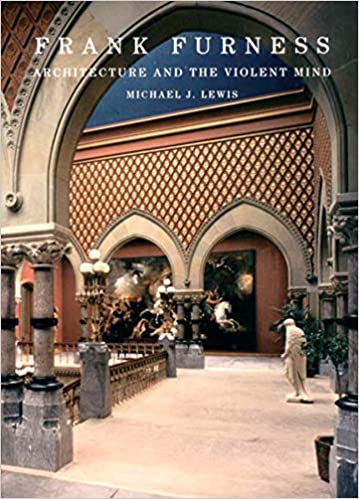
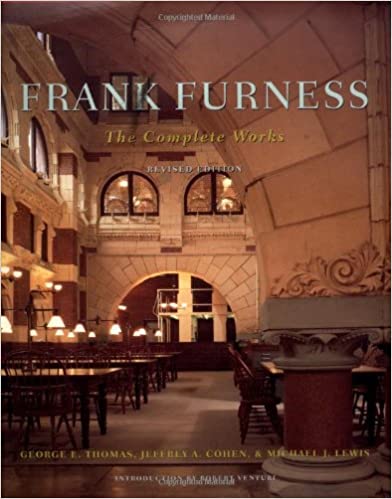
Furness designed over 600 buildings in his vigorous career and documentation of them can be challenging.
The Alfred Earnshaw House is generally believed to be the work of Philadelphia architect Frank Furness because of its strong resemblance to some of his most distinctive houses of the 1870s.
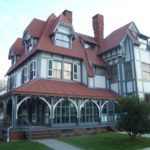
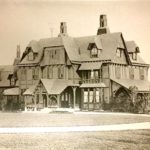
Its cross-gabled composition is found in Furness’s Emlen Physick House at Cape May, New Jersey, as is the prominent flaring chimney. Other details recall the Fairman Rogers House at Newport, Rhode Island, particularly the bold jerkinheads and overhanging third story.
These houses and others of the period show the special attention to the expression of the wood frame that Furness absorbed from his mentor, Richard Morris Hunt. But most characteristic of Furness’s 1870s work are the elongated knee-braces of the porch, which mix angular forms and vigorous curves, incision and notching, with a muscularity that none of his imitators achieved.
Sister houses: As Lewis observes, its construction date of 1880 falls directly in the midst of several very similar Furness houses. The family resemblance is striking:
1879 Emlen Physick Mansion in Cape May
1875 Fairman Rogers’ Fairholme, Newport, Rhode Island
The couple who built this home came from influential families and their histories are well-documented. They owned the property from 1880 to 1892. According to the National Register nomination for the Riverton Historic District, the builder was Abraham Merritt of Beverly.
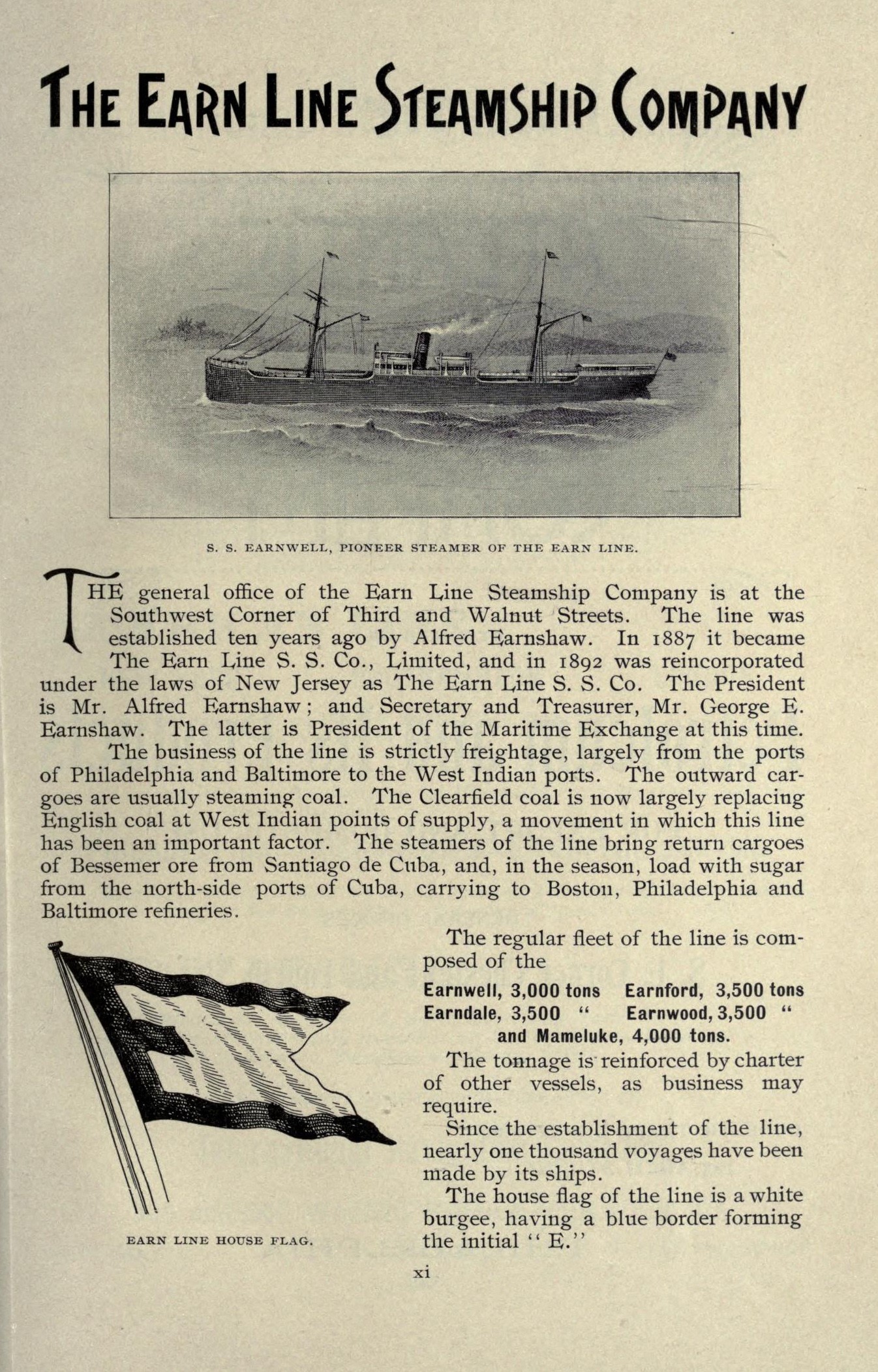
Alfred Earnshaw (1844-1896) was an iron broker in Philadelphia who founded a steamship line with his brother and served as its president until his death. He had recently come to the U.S. from Cambridge, England in 1872, first to New York, then set up his business in Philadelphia and commuted from Riverton.
1895 advertisement from the Hand Book of the Lower Delaware (archive.org)
The steamship line was called the Earn Line Steamship Co. and it prospered despite bad luck with its first ship, the S.S. Earnmoor. “Earn more” didn’t have a chance to earn much, as it sank in a gale in 1889 just two years after launching. Of a crew of 24, only seven survived. Sensational accounts of their three weeks adrift in a lifeboat in the Gulf Stream were widely reported at the time.
The company did prosper, though, and bought at least five steamers in the next few years.
A few years after the Earnshaws left Riverton for Philadelphia in 1892, Alfred died suddenly of a stroke at 51 years of age.
Alice Rebecca Strange Earnshaw (1850-1945) coll. Susan B. Strange
The real estate was purchased solely in the name of Alfred’s wife, Alice Rebecca Strange Earnshaw (1850-1945), which wasn’t unusual for people of means at that time. Alice was the daughter of Edwin B. Strange, a wealthy New York silk importer. He had commissioned the house in Dobbs Ferry in which Alice grew up, a Gothic Revival Hudson River castle named Ingleside, designed by architect Andrew Jackson Davis in 1854. That house still exists, now owned by St. Christopher’s School.
Later owners
In a remarkable tenure, from 1910-1954, this was the town doctor’s house and office.
Philadelphia Inquirer, February 8, 1914
Dr. Charles Street Mills (1878-1954) and his wife Lillie Belle Leibert Mills (1879-1970) moved here in 1910 with their 12-year-old daughter Mildred. The home was called “Twin Pines” for many years, though whether they had named it or inherited the name isn’t known.
When their daughter turned 16 they held “a small dance” in her honor here – a small dance of 75 people! Is this the right house for that, or what?
In the 1920 Census, after Mildred married and moved away, the household was just Dr. and Mrs. Mills – plus three servants, all people of color. John E. Lodine was the gardener (age 22), Charles Reed was the butler (age 23), and Luzella Davenport was the cook (age 35).











#/media/File:Shipbuilding_1957_issue-3c.jpg)
