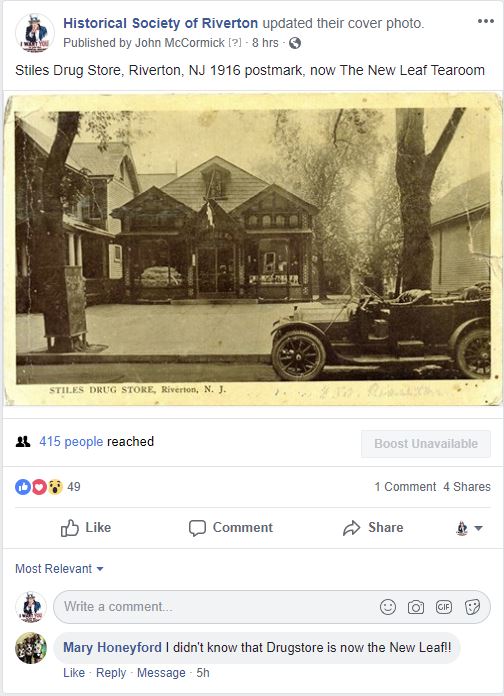
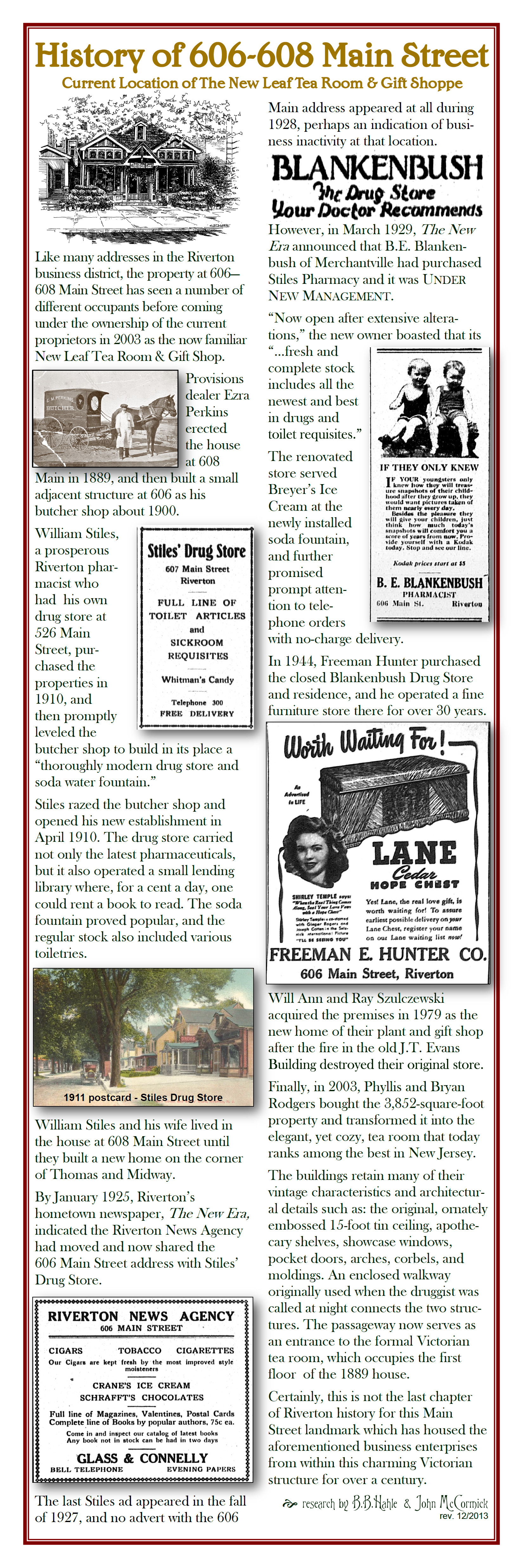
Two recent posts of old postcard scans to Facebook prompted several hundred views, a few dozen “likes,” a handful of “shares” and some comments. To help you get your bearings, I include a few more images here along with a History of 606-608 Main Street that was last revised in 2013.
This slideshow requires JavaScript.
Mary Honeyford is often counted among the names of those liking our posts on Facebook, and she said she did not know that the drugstore pictured in the old postcards was now The New Leaf Tea Room.
We are happy to dig deeper than that, Mary.
Dana Feigenbutz took over The New Leaf Tea Room from former owner Phyllis Rodgers who first conceived the idea in 2003, of starting a tea room and gift shop in the charming Victorian building at 606-608 Main Street. Prior to that, a plant and gift shop, a fine furniture store, two different drug stores, and a news agency occupied that address. See more details in the article below. We welcome more photographs, artifacts, and information about Riverton as we work to fulfill our mission “…to create an awareness of our heritage, to discover, restore, and preserve local objects and landmarks, and to continue to expand our knowledge of the history of the area.”
We invite you to join in this effort by supporting the Society with your membership. Look in the upcoming September issue of The Gaslight News for meeting announcements, a word from President Bill Brown, project updates, and details on events planned for September and November. We look forward to seeing you. – JMc
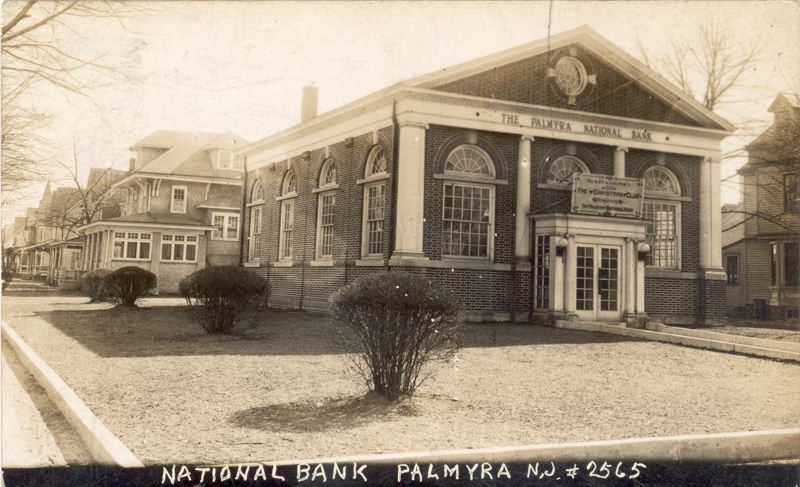
Last week Bob Kotcher of Hackensack, NJ, a researcher with an interest in New Jersey’s national banks and the currency they issued, called us after he saw this image on our website and he wanted to know if he could buy the original or get a better scan. This post is the result of an exchange of emails that turned out to be a win-win, as they say. Since we do not own the original postcard I sent him a high-resolution scan of the Palmyra National Bank real photo postcard and he gave me a history lesson on the practice of such banks to issue currency back in the day.
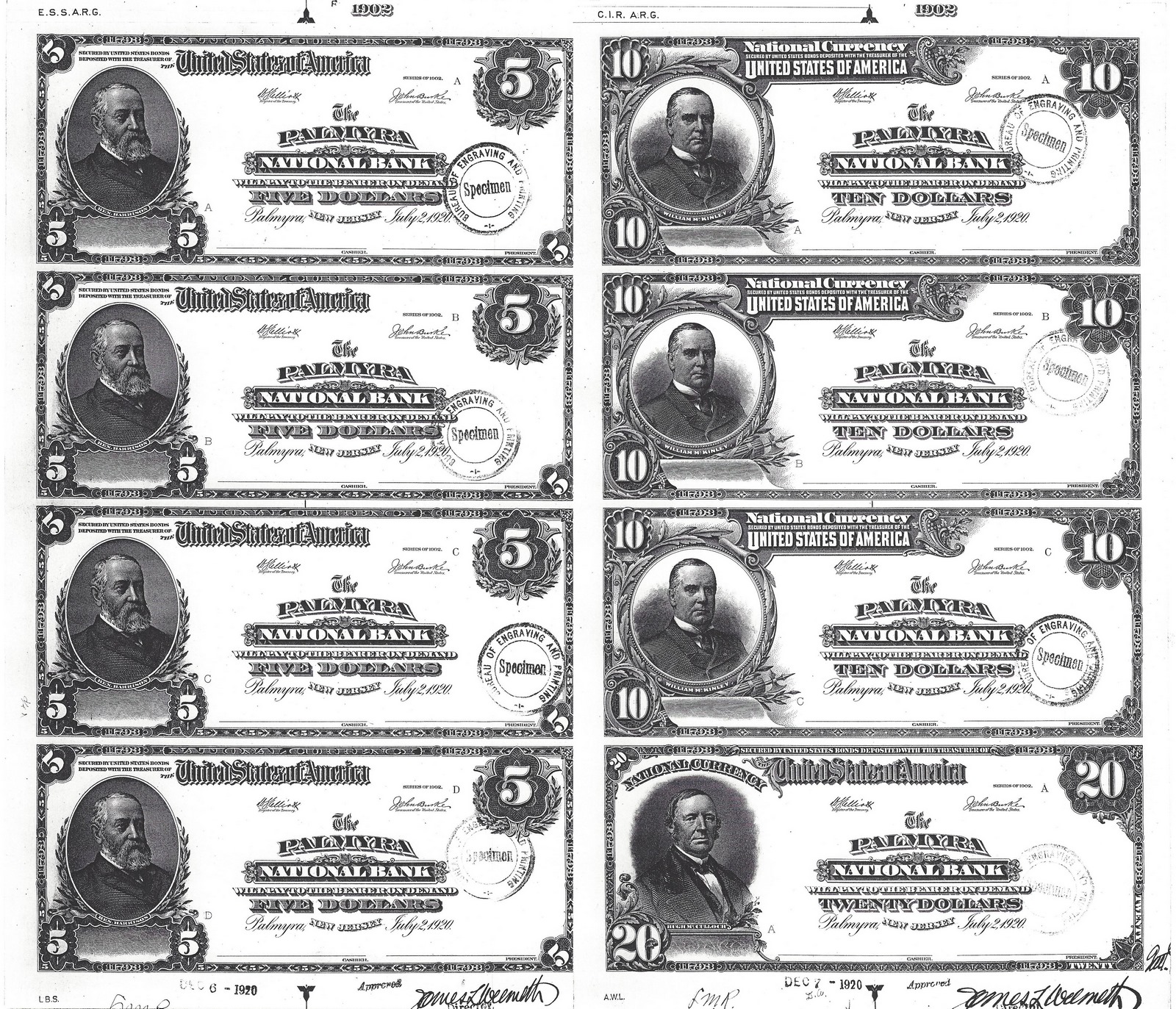
According to Mr. Kotcher, New Jersey’s 342 National Banks issued National Banknote Currency generally between 1863 up until May of 1935. The Palmyra National Bank, Charter #11793, started in business on July 2, 1920 and issued $157,270 in $5, $10 and $20 National Currency before it was placed into receivership on January 6, 1934. See the scan for the proof sheets below.
#11793 Palmyra $5-$10-$20 Proof Sheets, scan courtesy of Bob Kotcher
Bob writes:
I did work for the Smithsonian back in 2003 along with a fellow collector and my mentor in this hobby. We wound up sorting all the New Jersey Proof Sheets putting them into Federal Charter number order. That took us 2 days, but in return, we were allowed to photo copy any of the New Jersey Proofs that we wanted.
This represents one proof for each of the bank’s printing plates. The proof sheets were pulled off the newly made printing plate to make sure that the plate accepted and transferred ink properly. Proofs were pulled prior to the plates being put into production to minimize any problems in production.
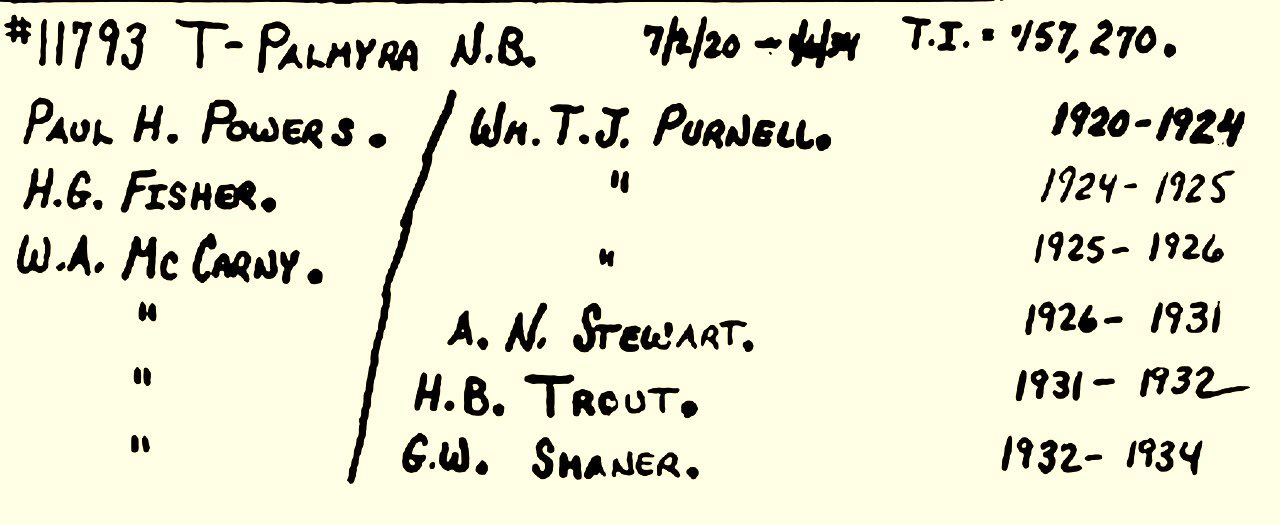
Palmyra Bank Officers 11793
I am also attaching an index card that I use to show the progression of bank officers at the bank. The Cashier is on the left and the President on the right. The large size National Banknotes were produced at the Bureau of Engraving and Printing then sent to the Comptroller of Currency, who then distributed them to the bank itself.
The Large Size notes from this bank were shipped unsigned to the bank. Upon arrival at the bank, the Cashier would sign his name on the left and the President would sign on the right. Assistant Cashiers would sometimes sign for the Cashier, and Vice Presidents could sign for the President of the bank, as long as they noted their title on the note.
Curious about our own Cinnaminson National Bank, I asked Bob about it and he replied:
Cinnaminson Natl Bank, Riverton, NJ 1910
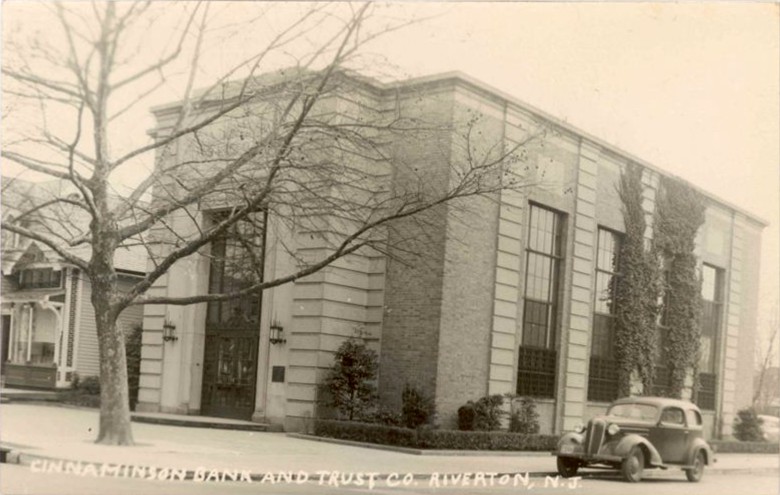
The Cinnaminson National Bank of Riverton, New Jersey. This National Bank Chartered in December of 1906, and issued $311,350. in large sized $10 and $20 National Currency before it was placed in voluntary liquidation on April 1, 1925. My records show that it was succeeded by “The Cinnaminson Bank and Trust Company, Riverton”. Once they dropped their National Bank Charter, I basically have no knowledge of them, as they would not have been able to issue their own currency.
Checking our archives yields a 1909 New Era Christmas Issue with some more information about Cinnaminson National Bank.
1909 New Era Christmas Issue, p17-18Cinnaminson Bank – c. 1930s, scan courtesy of Betty B. Hahle
And to further illuminate the history and development of Cinnaminson National Bank and its successor Cinnaminson Bank and Trust Company, see Town Historian Paul W. Shopp‘s detailed article What’s Old is New Again at the Bank on Mainfrom a May 2011 post.
Now all we need are some scans of proofs or actual banknotes issued by Cinnaminson National Bank.
Turns out that the banknotes for these two hometown banks can be quite scarce.
This image of a Palmyra National Bank banknote is courtesy of antiquebanknotes.com.
Palmyra Nat’l Bank banknote courtesy of antiquebanknotes.com
I found this source that has additional information about the denominations and dollar amounts of notes issued for both banks. See the entries for Palmyra National Bank and Cinnaminson National Bank.
Thank you to Bob Kotcher for sparking this deep dive into two of the area’s old national banks.
We are always anxious to acquire more images, artifacts, and particulars about Riverton history, so please contact us if you can help.
Bob Kotcher adds that he really wants to buy that original Palmyra National Bank RPPC that started this whole thing, so please contact him through the comment form below. – JMc
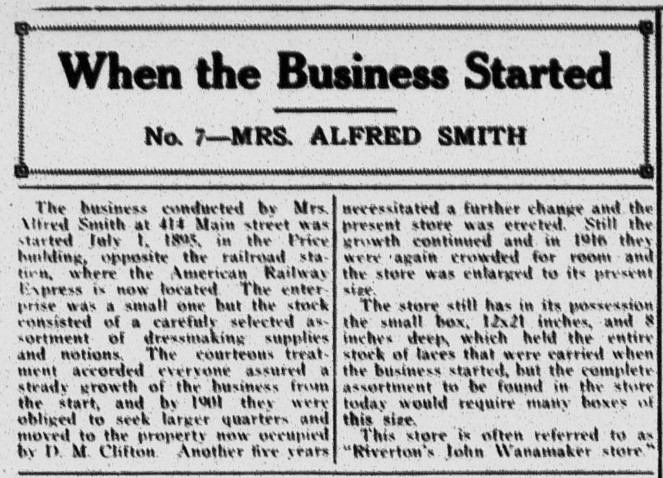
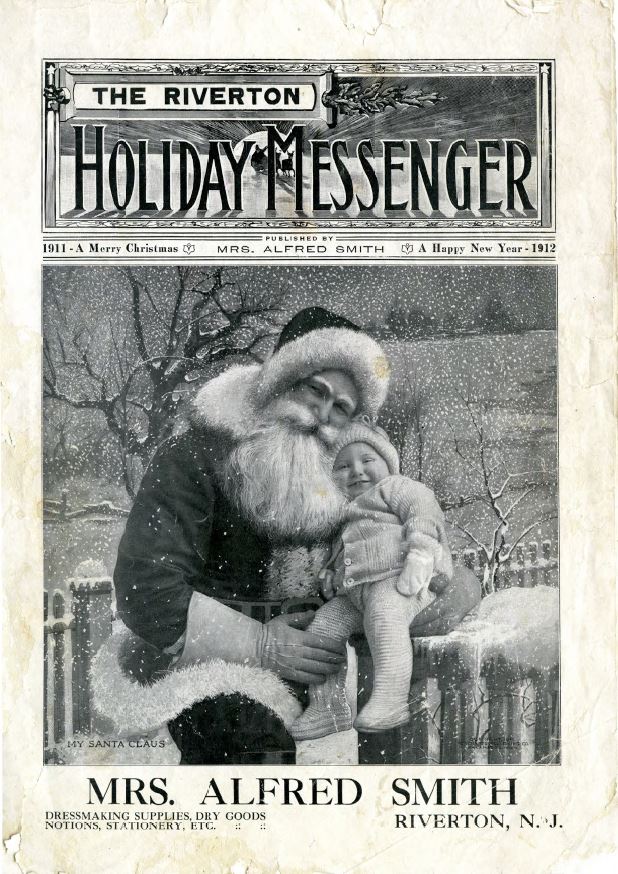
Kathi Giden called us out of the blue and offered to give to the HSR an 8-page advertisement dated 1911 for Mrs. Alfred Smith’s store that residents once referred to as “Riverton’s John Wanamaker store.”
Mrs. Alfred Smith, New Era, Feb 25, 1925
Riverton’s hometown newspaper, The New Era, profiled the thriving enterprise in its February 25, 1925 issue.
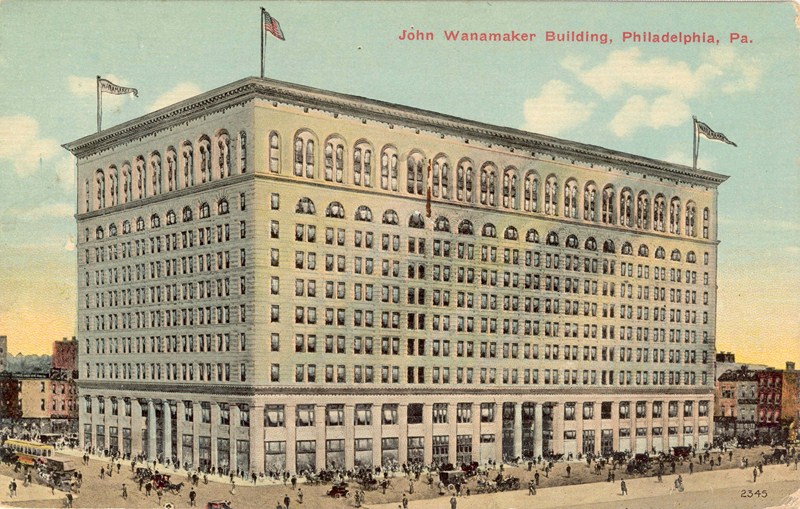
John Wanamaker Building, Philadelphia, PA. Scanned postcard image courtesy of William Downs
For you young’uns who don’t get the dated reference, John Wanamaker’s was the first department store in Philadelphia.
Like the much larger larger emporium at 13th and Market, Mrs. Alfred Smith’s dry goods and notions store stocked a large and varied stock of quality merchandise and built a fine reputation for its courtesy, integrity, and customer service. It served the community for more than fifty years.
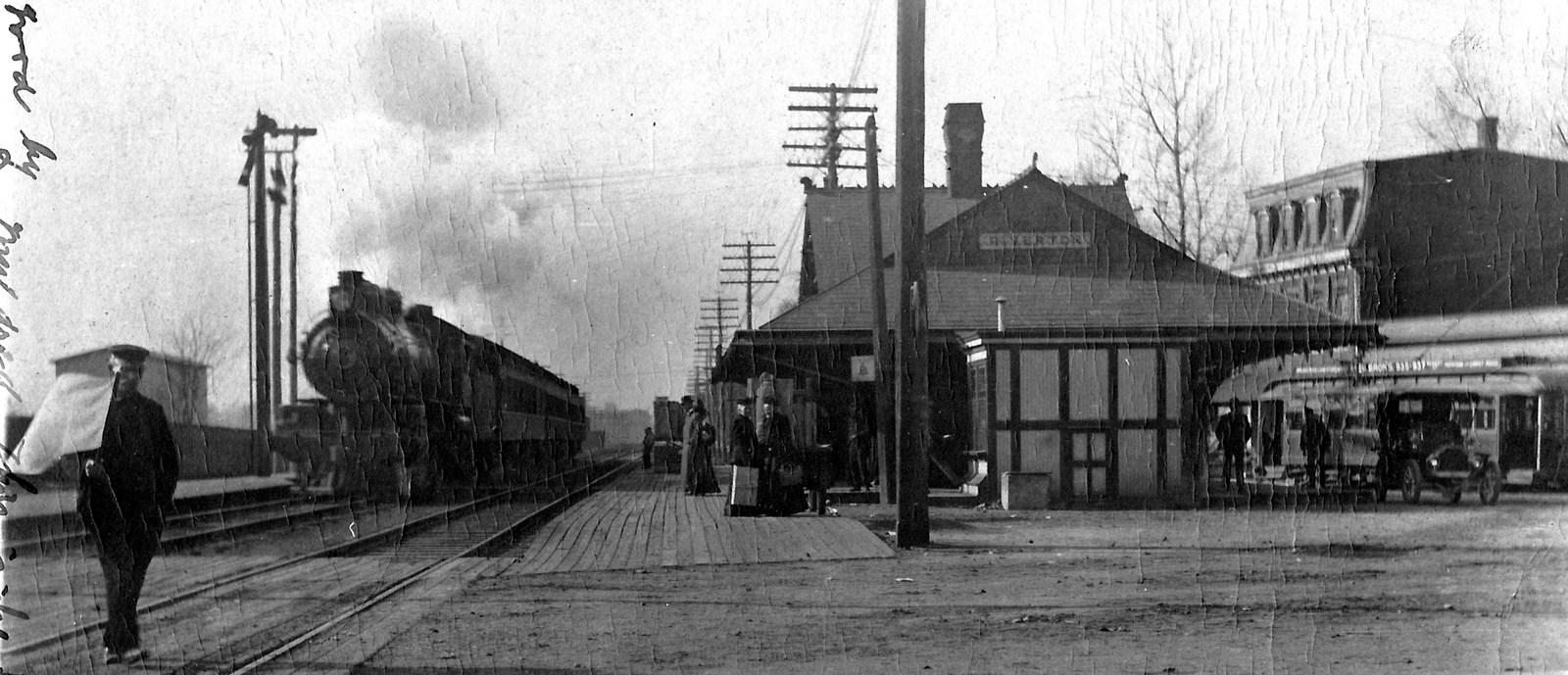
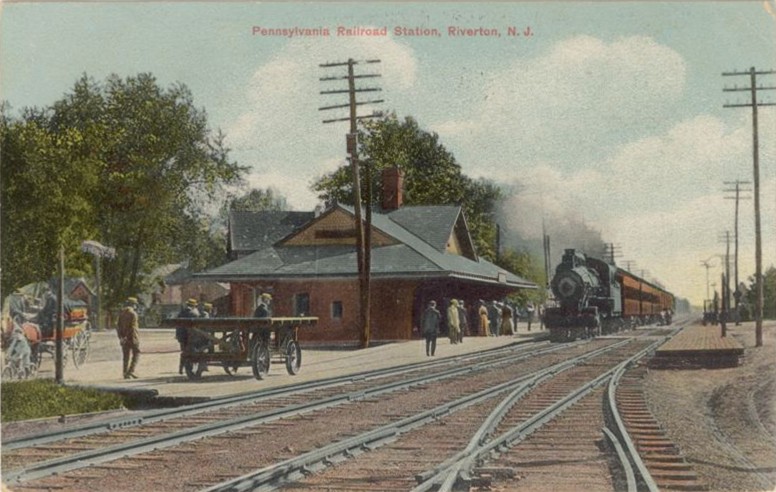
Railroad Station c1905, Price Building at right. Scanned image courtesy of Nick Mortgu
The first floor of the three-story Price Bldg. opposite the old Pennsylvania Railroad Station first housed the shop which opened July 1, 1895.
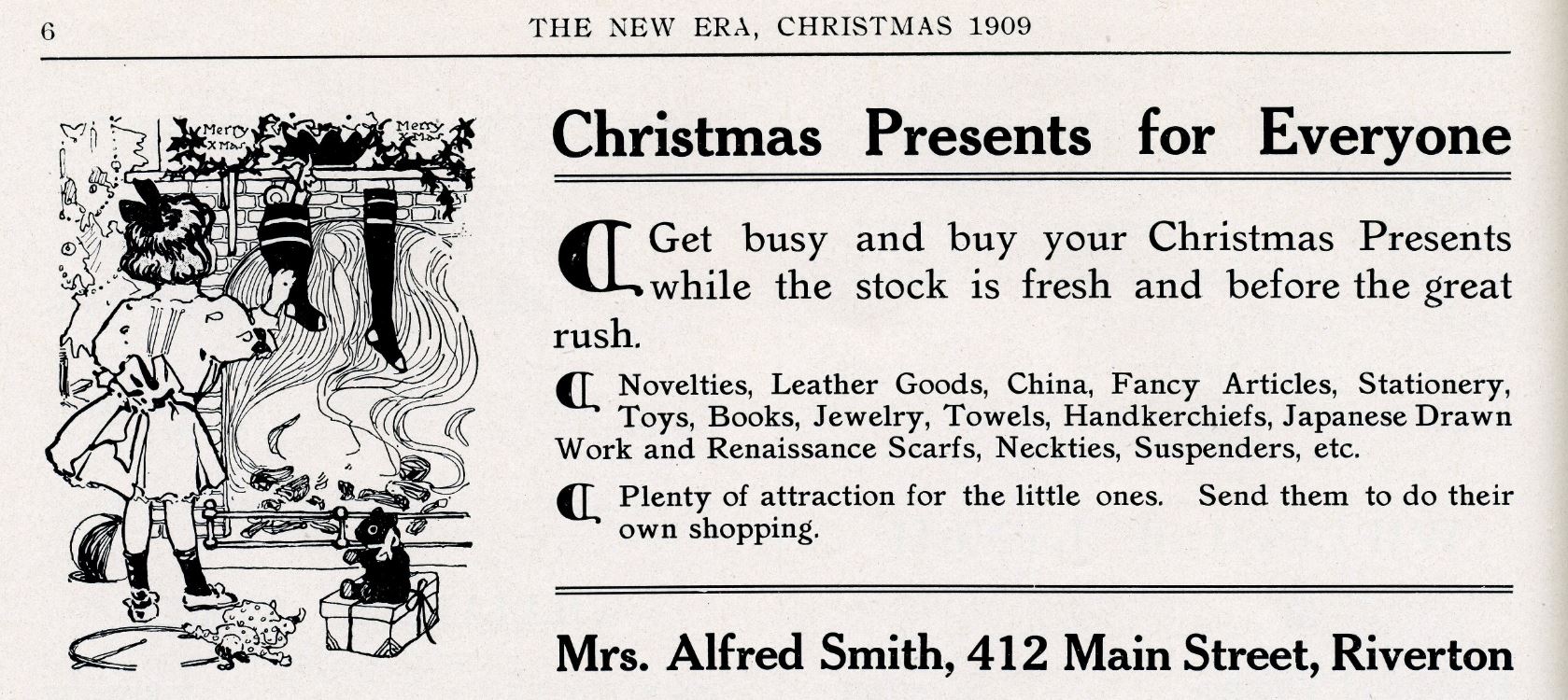
The New Era 1909 Christmas Issue, p6
The business grew and relocated about 1905 to the brick mansarded double at 412 Main Street.
The proprietress clearly understood the power of advertising when, in 1911, she published this 8-page advertisement for the business.
Click on the cover page below to see the PDF file for the entire ad.
The Riverton Holiday Messenger, Christmas 1911. Original publication, a gift from Ms. Kathi Giden
The Historical Society of Riverton is indebted to Ms. Giden for her donation of this rare advertisement.
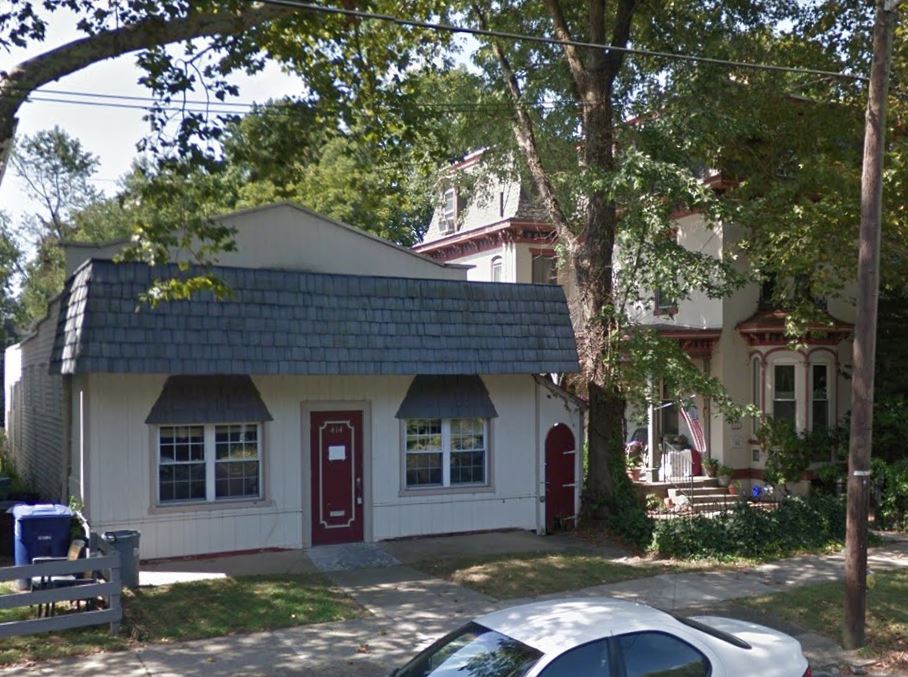
414 Main on left, 412 on rightSmith store sold March 1946
The store later moved to a one-story building erected for the purpose at 414 Main. (You might recognize 414 Main as the home of The Sharon Shop, a popular lunchtime eatery for students and teachers in the 1970s.)
Downsized in the mid-1940s, according to a report in The New Era, the store returned to the Smith home at 412 Main, but we have not determined how long it remained open.
Can a reader help? We welcome additional particulars and photos about Mrs. Alfred Smith’s store. – JMc
 We welcome more photographs, artifacts, and information about Riverton as we work to fulfill our mission “…to create an awareness of our heritage, to discover, restore, and preserve local objects and landmarks, and to continue to expand our knowledge of the history of the area.”